Grown-In Wolf Cut With Curtain Bangs: 15 Soft Looks
This post contains affiliate links. If you buy through them, we may earn a small commission at no extra cost to you.

The classic wolf cut is bold: choppy layers, lots of volume on top, and a shaggy, edgy feel. But not everyone wants that much drama.
That’s where the grown-in wolf cut comes in. It keeps the shape and movement of a wolf cut, but with softer, longer layers that blend together. Add curtain bangs, and you get a face-framing style that looks effortless and grows out beautifully.
A grown-in wolf cut with curtain bangs is a softer, longer version of the wolf cut, with blended layers and center-parted bangs that sweep to both sides. It’s lower maintenance than a fresh wolf cut, works on straight, wavy, curly, thick, and fine hair, and usually needs a trim only every 8 to 12 weeks.
Below are 15 soft looks to show your stylist, plus tips on styling and maintenance.
What Is a Grown-In Wolf Cut?
A wolf cut mixes a shag and a mullet: shorter, fuller layers at the crown and longer, thinner layers at the bottom.
A grown-in (or grown-out) wolf cut is what happens when those layers get longer and softer. The contrast between short and long is less extreme, the shape looks more natural, and it doesn’t need as much styling.
| Classic wolf cut | Grown-in wolf cut | |
|---|---|---|
| Layers | Short, choppy, high contrast | Longer, softer, blended |
| Vibe | Edgy, bold | Soft, effortless |
| Maintenance | Trim every 6–8 weeks | Trim every 8–12 weeks |
| Styling | Needs texture and volume | Air-dries well, less effort |
| Grow-out | Can look awkward | Grows out smoothly |
Why Add Curtain Bangs?
- They frame your face and highlight your cheekbones and eyes.
- They blend into the layers, so the whole cut flows together.
- They’re forgiving. As they grow, they just become face-framing layers.
- They’re flattering on most face shapes, especially round, square, and heart-shaped faces.
15 Soft Grown-In Wolf Cuts With Curtain Bangs
1. Classic Soft Grown-In Wolf Cut

This is the go-to version: shoulder-length hair with softly blended layers and curtain bangs that sweep to both sides. The volume sits at the crown without looking choppy. It’s an easy, everyday style that suits most hair types and grows out without any awkward stages.
2. Long Grown-In Wolf Cut
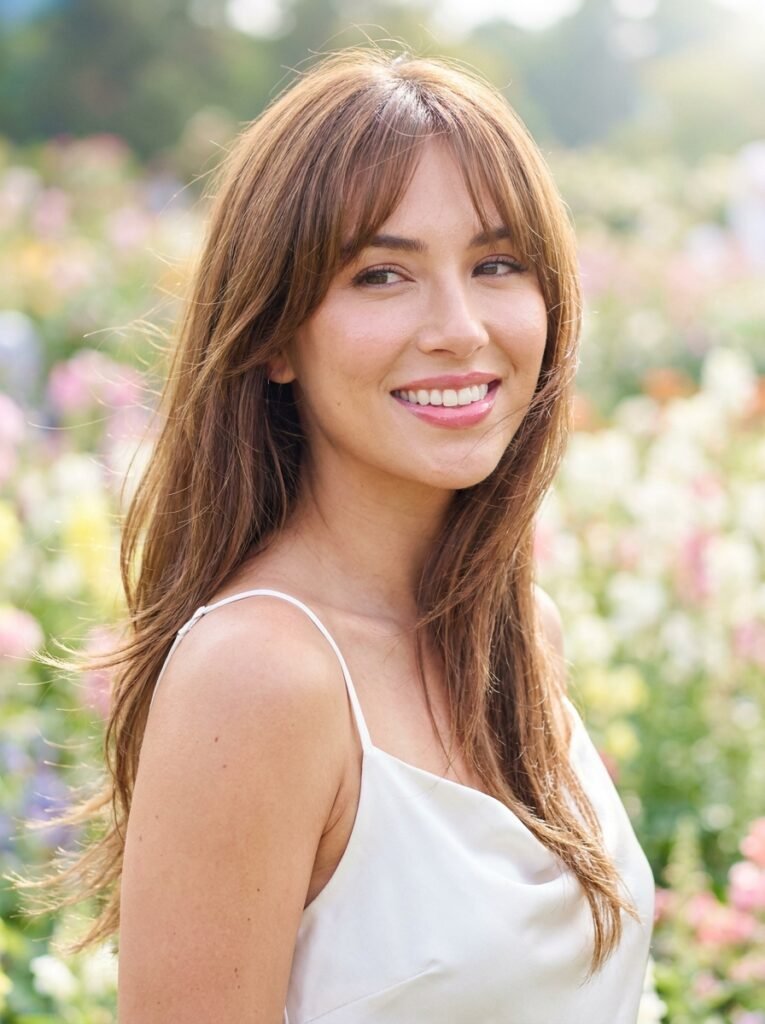
If you don’t want to lose length, ask for a long wolf cut. The layers start around the cheekbones and fall to mid-back, adding movement without making hair look short. Long curtain bangs blend into the top layers. It’s a great choice for anyone growing their hair out.
3. Wavy Grown-In Wolf Cut

Wavy hair and wolf cuts are a perfect match. The layers remove weight so your waves can bounce, and the curtain bangs fall into a natural swoop. Scrunch in a little mousse or sea salt spray and let it air-dry for a soft, beachy look with almost no effort.
4. Curly Grown-In Wolf Cut
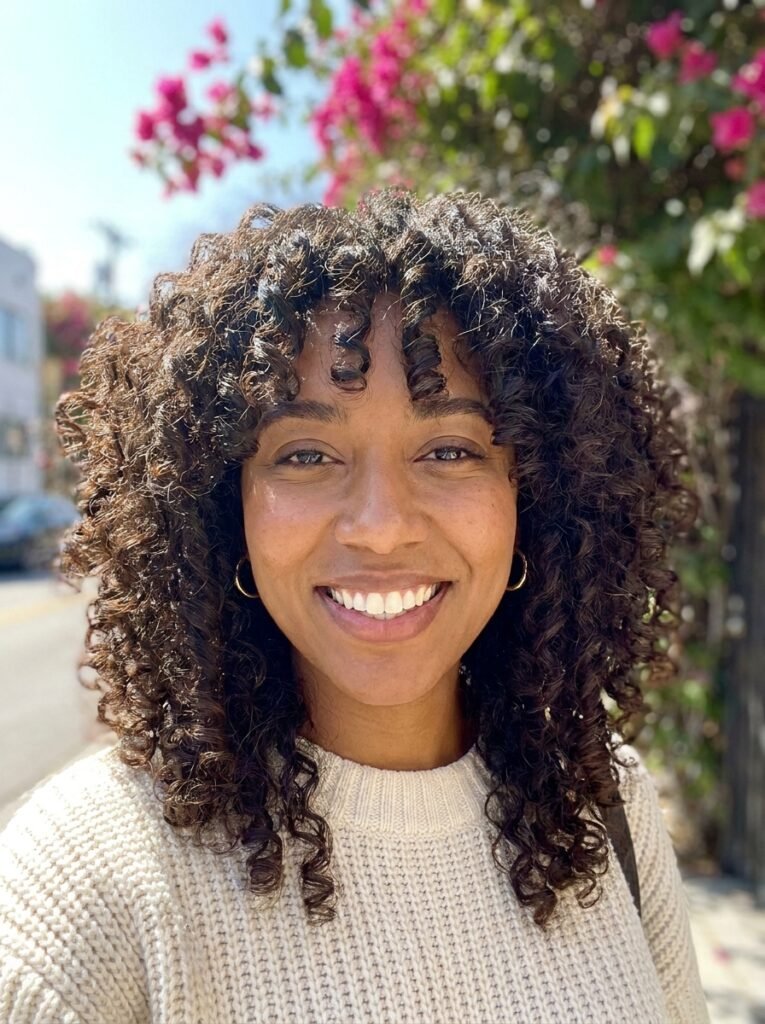
On curly hair, a wolf cut gives a rounded, voluminous shape that shows off every curl. Ask for the cut to be done dry or curl by curl so the layers sit right. Curly curtain bangs add softness around the face. Use a curl cream and diffuse on low heat.
5. Grown-In Wolf Cut for Thick Hair

Thick hair can feel heavy and shapeless, but layers solve that. Your stylist can add internal layering to remove bulk while keeping the outline soft. The result is lighter, more manageable hair with lots of movement. Curtain bangs break up the fullness around the face and keep it airy.
6. Grown-In Wolf Cut for Fine Hair

Fine hair needs fewer, longer layers so it doesn’t look thin at the ends. A soft wolf cut adds volume at the crown and makes hair look fuller overall. Keep the curtain bangs light and wispy. A volumizing mousse at the roots and a round-brush blow-dry make a big difference.
7. Shaggy Grown-Out Wolf Cut

For a slightly more undone, 70s-inspired vibe, go for a shaggier finish. The layers are textured with a razor or point-cut so the ends look piece-y. Curtain bangs are a little messier and fall naturally. Finish with texturizing spray for that lived-in, rock-and-roll style without being too edgy.
8. Medium-Length Grown-In Wolf Cut

This lands at the collarbone, the sweet spot between short and long. It’s long enough to tie up but short enough to feel fresh. The ends can flip out slightly for a playful touch. Pair with mid-length curtain bangs that hit the cheekbones for a balanced, flattering frame.
9. Soft Wolf Cut With Face-Framing Layers
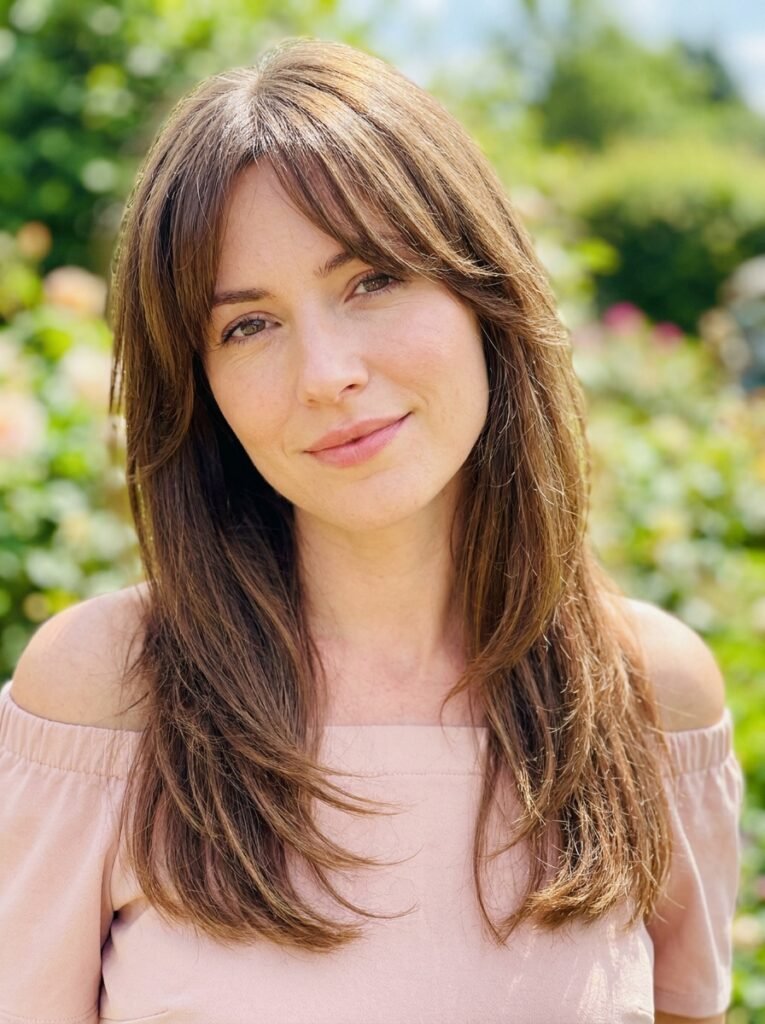
Here the curtain bangs flow straight into longer face-framing layers that cascade down. It creates a gentle, soft outline around your face and is great if you’re not sure about committing to bangs. It’s also an ideal stage for anyone growing out bangs, because it looks intentional.
10. Grown-In Wolf Cut With Blonde Highlights

Highlights or balayage make the layers really stand out by adding dimension. Lighter pieces around the curtain bangs brighten your face, a technique called a “money piece.” Choose soft, blended highlights for a low-maintenance grow-out. Use a purple shampoo now and then to keep blonde tones fresh.
11. Dark Brunette Grown-In Wolf Cut

A rich, dark brunette shade makes the cut look polished and glossy. Without color contrast, the shape and movement do the talking. This is a great low-maintenance option, since there are no roots or highlights to keep up. Add a shine spray or a gloss treatment to make it shine.
12. Copper Grown-In Wolf Cut

Copper and auburn tones look amazing with a soft wolf cut, especially in fall and winter. The warm color adds richness and makes the layers glow in sunlight. Red tones fade faster than other colors, so use a color-safe shampoo, wash with cool water, and consider a color-depositing conditioner.
13. Sleek Straight Grown-In Wolf Cut

On straight hair, a soft wolf cut looks modern and sleek. Blow-dry with a round brush to bend the ends and create gentle movement, and style the curtain bangs away from your face. A light serum controls frizz and adds shine. It’s a polished option for work or everyday wear.
14. Grown-In Wolf Cut With Bottleneck Bangs

Bottleneck bangs are a twist on curtain bangs: shorter and narrower in the center, then longer and wider at the sides, like the shape of a bottle. They’re a little fuller than curtain bangs and look adorable with a soft wolf cut. They’re a great middle ground between curtain and full bangs.
15. Air-Dried Low-Maintenance Wolf Cut

For the busiest mornings, this cut is designed to air-dry. The layers are placed to work with your natural texture, so you just apply a leave-in conditioner and let it dry. Only the curtain bangs might need a quick blow-dry. It’s ideal for anyone who wants style without spending time.
How to Style a Grown-In Wolf Cut With Curtain Bangs
Style the curtain bangs (2 minutes)
- Dampen your bangs if they’ve dried in a weird shape.
- Blow-dry them with a round brush, pulling them forward and then rolling them back and away from your face.
- Split them at the center and let them fall to both sides.
- Set with a light hairspray if needed.
🔗 [AFFILIATE: Small round brush]
🔗 [AFFILIATE: Hair dryer with concentrator nozzle]
Add volume and texture
- Volumizing mousse at the roots on damp hair.
- Sea salt or texturizing spray on dry hair for piece-y layers.
- Dry shampoo at the crown for lift on day 2.
🔗 [AFFILIATE: Volumizing mousse]
🔗 [AFFILIATE: Texturizing spray]
🔗 [AFFILIATE: Dry shampoo]
For waves and curls
- Apply curl cream or mousse to soaking-wet hair.
- Scrunch and air-dry or diffuse on low heat.
🔗 [AFFILIATE: Curl cream]
🔗 [AFFILIATE: Hair diffuser]
Heatless option
- Use velcro rollers on your bangs and crown while you get ready.
🔗 [AFFILIATE: Velcro rollers]
What to Tell Your Stylist
Bring photos, and use these phrases:
- “I want a soft, grown-in wolf cut, not a choppy one.”
- “Please keep the layers blended and keep my length at about [shoulders / collarbone / mid-back].”
- “I’d like curtain bangs that hit around my [cheekbones / nose].”
- “I usually air-dry / blow-dry my hair.” (This helps them cut for your routine.)
- For curls: “Could you cut it dry or curl by curl?”
Which Look Suits Your Hair Type?
| Hair type | Best looks |
|---|---|
| Fine | #6 Fine hair, #1 Classic, #13 Sleek straight |
| Thick | #5 Thick hair, #7 Shaggy, #2 Long |
| Wavy | #3 Wavy, #15 Air-dried, #9 Face-framing |
| Curly | #4 Curly, #15 Air-dried |
| Straight | #13 Sleek straight, #8 Medium, #11 Dark brunette |
Maintenance Tips
- Trim every 8–12 weeks to keep the shape.
- Trim bangs every 3–5 weeks (many salons do quick bang trims for free or cheap).
- Use heat protectant before blow-drying.
- Sleep on silk or satin to keep layers smooth.
- Don’t over-wash. Dry shampoo helps your bangs stay fresh between washes.
🔗 [AFFILIATE: Heat protectant spray]
🔗 [AFFILIATE: Silk pillowcase]
FAQ
What’s the difference between a wolf cut and a grown-in wolf cut? A classic wolf cut has short, choppy, high-contrast layers. A grown-in wolf cut has longer, softer, blended layers that look more natural.
Is a wolf cut good for fine hair? Yes, if the layers are kept longer and fewer. It can add volume and make fine hair look fuller.
Can I get a wolf cut on curly hair? Yes. Curly wolf cuts look amazing. Ask your stylist to cut it dry or curl by curl.
How often do I need to trim a grown-in wolf cut? Every 8 to 12 weeks for the cut, and every 3 to 5 weeks for the bangs.
Are curtain bangs hard to style? Not really. A quick blow-dry with a round brush is usually enough. You can also use velcro rollers.