Winter Hair Care Routine for Dry, Frizzy Hair (Step-by-Step)
This post contains affiliate links. If you buy through them, we may earn a small commission at no extra cost to you.
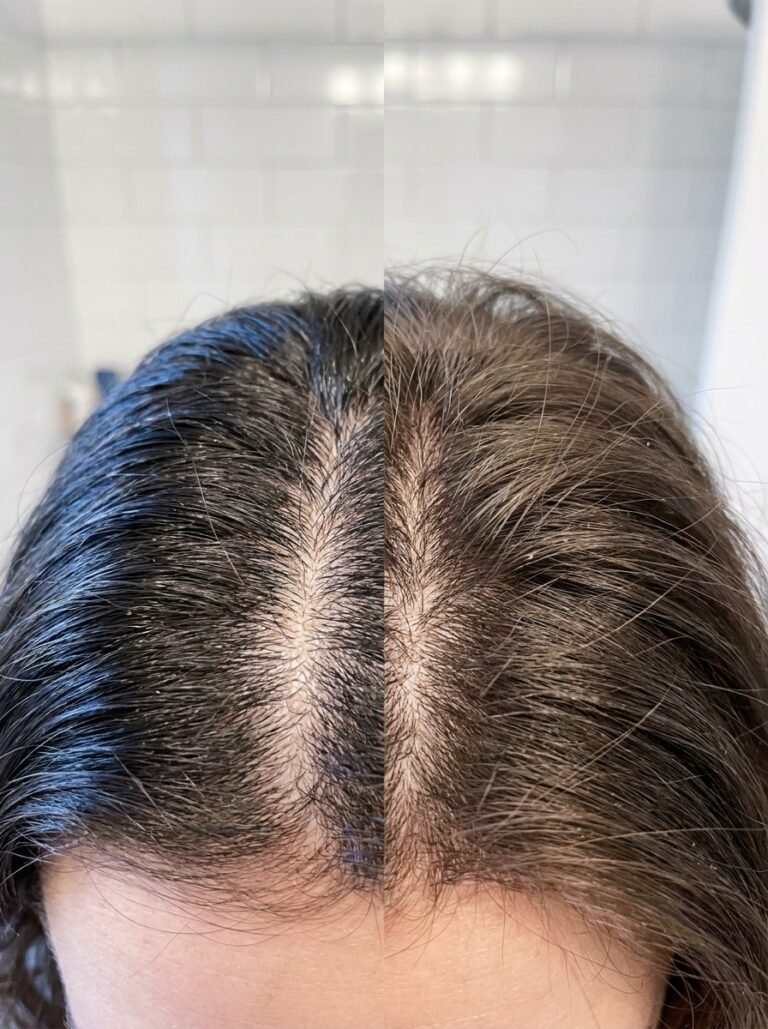
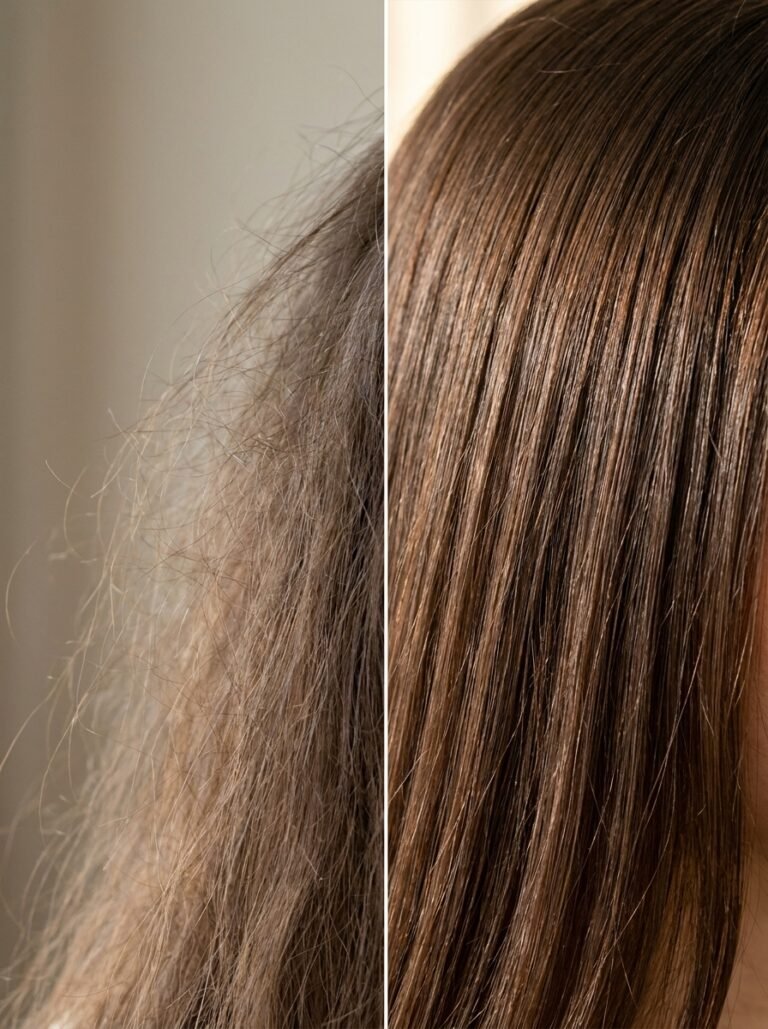
Every winter, the same thing happens. Your hair gets dry, your ends feel rough, frizz shows up out of nowhere, and every time you pull off your hat, your hair floats with static.
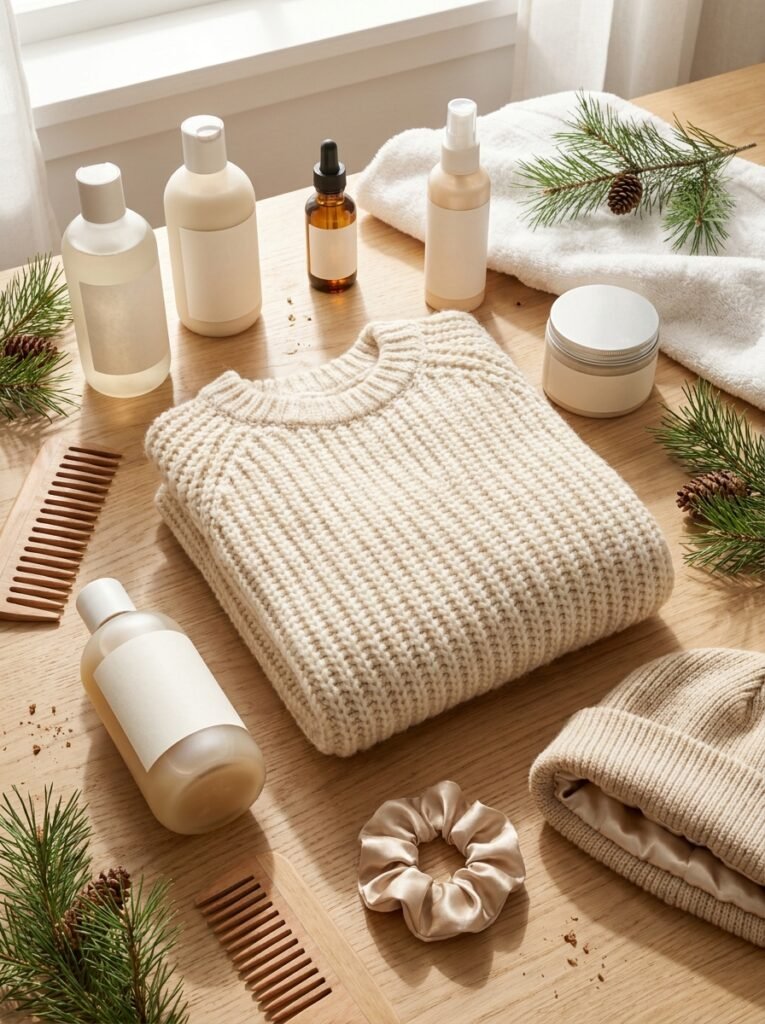
The fix isn’t one magic product. It’s a simple routine that puts moisture back in and protects your hair from cold air, indoor heat, and friction.
Below is the full routine broken into wash day, daily, nighttime, and weekly steps, plus how to adjust it for your hair type.
Why Hair Gets So Dry in Winter
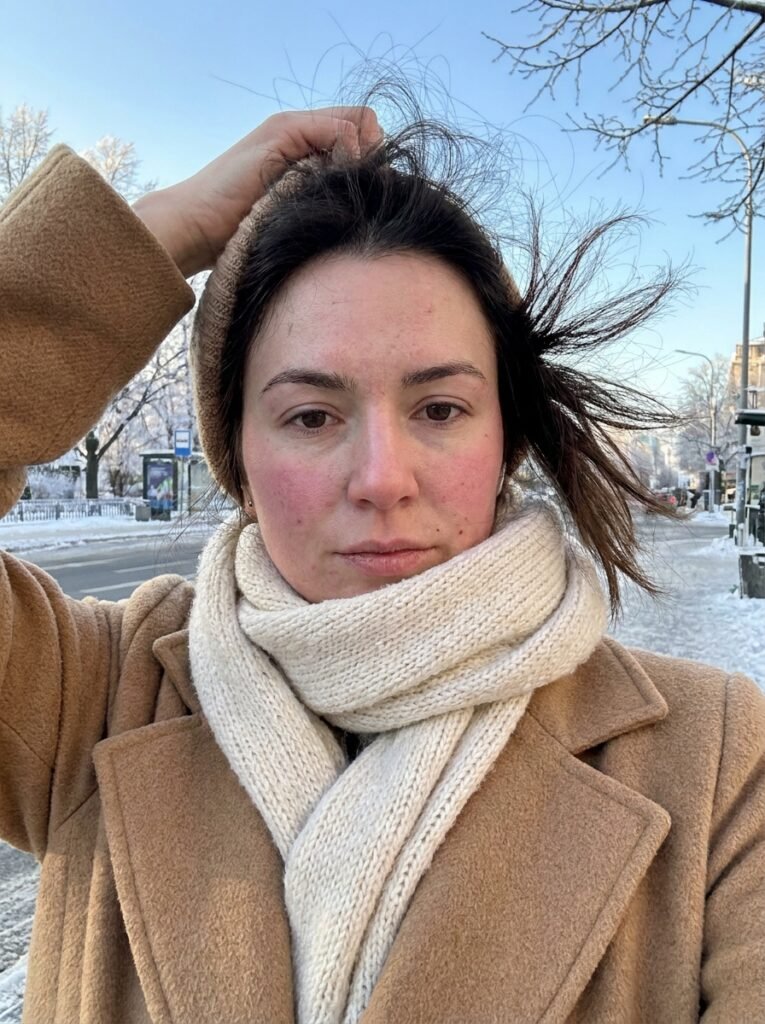
- Cold, dry air outside holds very little moisture.
- Indoor heating dries the air even more.
- Hot showers strip natural oils from your scalp and hair.
- Hats, scarves, and collars cause friction and static.
- Less humidity means your hair loses water faster than it can hold it.
The result is a rough outer layer on each strand. That’s what makes hair look dull, feel straw-like, and frizz up.
Your Winter Routine at a Glance
| When | Step | What it does |
|---|---|---|
| Wash day | Gentle shampoo, conditioner, leave-in, oil | Cleans without stripping, adds moisture |
| Every day | Light oil on ends, protect from cold | Keeps ends smooth, cuts frizz |
| Before styling | Heat protectant, medium heat | Prevents more dryness |
| Every night | Loose braid, silk pillowcase, humidifier | Less friction, more moisture |
| Once a week | Deep conditioning mask | Restores softness |
| Every 2–3 weeks | Clarifying wash (if needed) | Removes buildup so products work |
| Every 8–12 weeks | Trim | Removes split ends |
Wash Day Routine
Step 1: Pre-wash oil (optional, for very dry hair)

If your ends feel extra dry, smooth a little oil (like argan or jojoba) through your mid-lengths and ends 20–30 minutes before washing. It helps protect them from being stripped by shampoo.
Skip the scalp if you have dandruff or an oily scalp.
🔗 [AFFILIATE: Argan oil or pre-wash hair oil]
Step 2: Shampoo gently
- Use a moisturizing or sulfate-free shampoo.
- Wash with lukewarm water, not hot.
- Shampoo your scalp only. Let the suds rinse down your lengths.
- If your scalp allows it, wash one less time per week than you do in summer.
🔗 [AFFILIATE: Moisturizing sulfate-free shampoo]
Step 3: Condition every single time
Apply conditioner from your ears down. Leave it on for 2–3 minutes, then detangle gently with a wide-tooth comb before rinsing.
🔗 [AFFILIATE: Hydrating conditioner]
🔗 [AFFILIATE: Wide-tooth comb]
Step 4: Dry gently
- Squeeze, don’t rub. Use a microfiber towel or soft T-shirt.
- Don’t go outside with wet hair in freezing weather.
- If you blow-dry, use medium heat and point the nozzle down the hair shaft.
🔗 [AFFILIATE: Microfiber hair towel]
Step 5: Leave-in, then seal
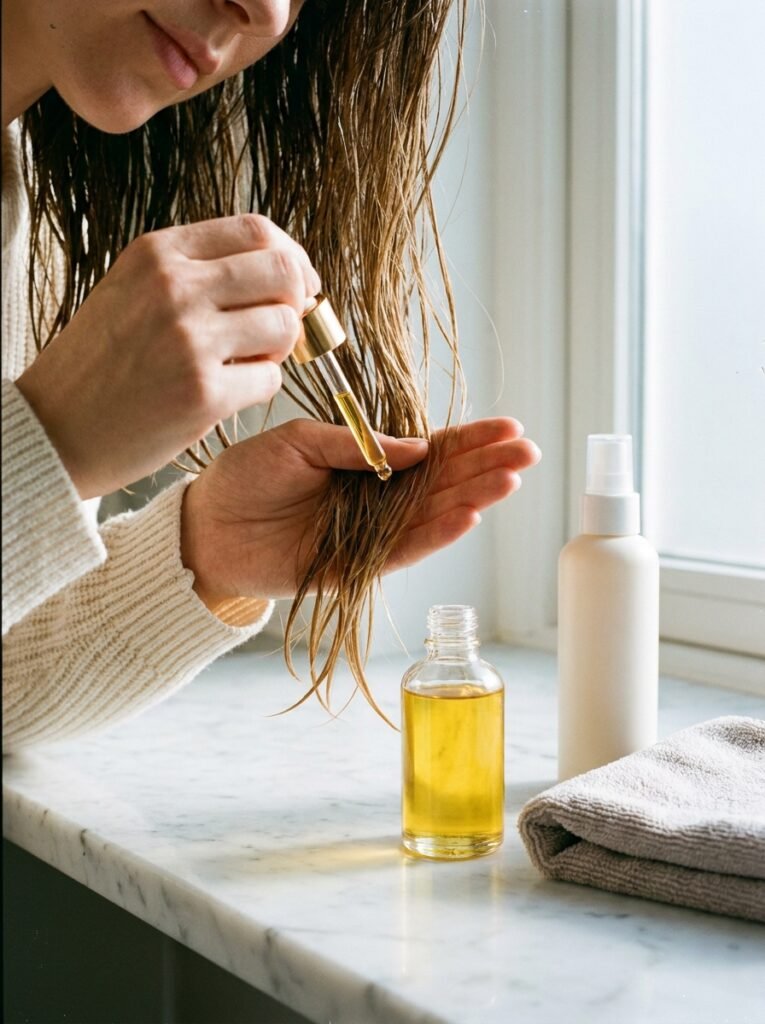
On damp hair:
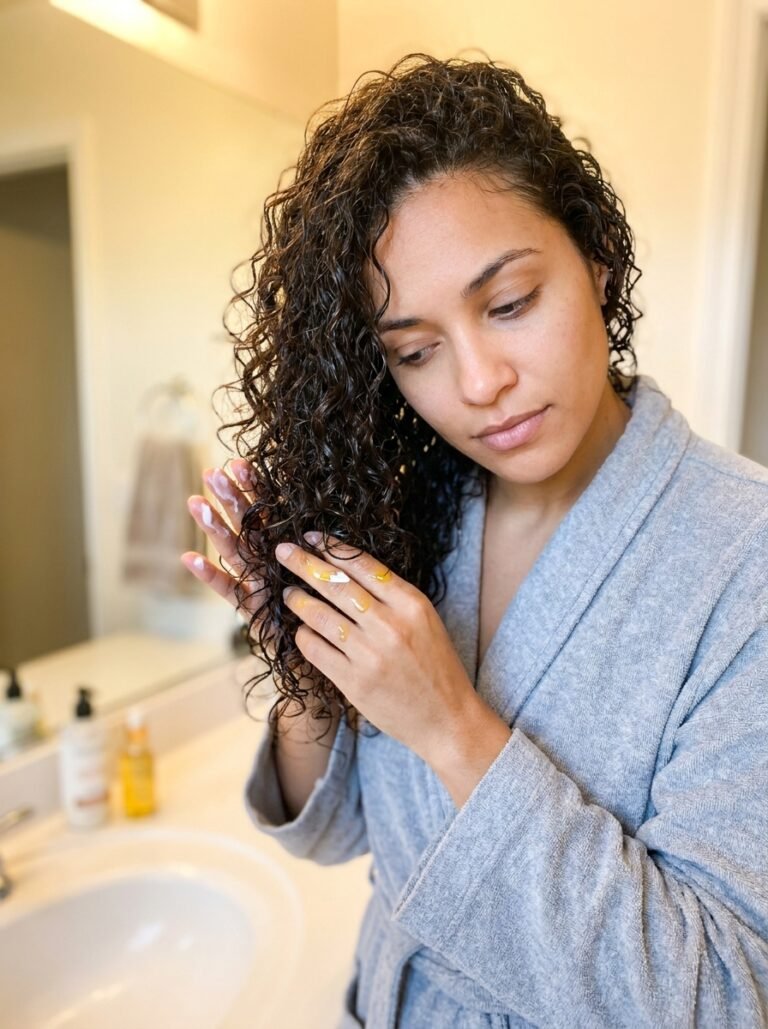
- Spray or smooth in a leave-in conditioner.
- For thick or curly hair, add a leave-in cream.
- Seal your ends with 2–3 drops of hair oil or serum.
This layering keeps moisture in for longer.
🔗 [AFFILIATE: Leave-in conditioner spray]
🔗 [AFFILIATE: Lightweight hair oil / serum]
Step 6: Protect before heat styling
Always use a heat protectant before blow-drying, straightening, or curling. Lower the temperature on your tools.
🔗 [AFFILIATE: Heat protectant spray]
Daily Routine

- Refresh ends with a drop of oil. Rub between your palms and smooth over the ends and any frizz.
- Fight static with a light anti-static spray or a tiny bit of leave-in.
- Choose satin-lined hats or wear a thin satin scarf under your beanie.
- Keep long hair tucked in your coat or in a braid on windy days.
- Drink enough water. It won’t fix dry hair by itself, but it helps your skin and scalp.
🔗 [AFFILIATE: Satin-lined beanie]
🔗 [AFFILIATE: Anti-static / anti-frizz spray]
Nighttime Routine
- Detangle before bed so knots don’t get worse overnight.
- Wear a loose braid or pineapple with a silk scrunchie.
- Sleep on a silk or satin pillowcase, or wear a satin bonnet.
- Run a humidifier in your bedroom. Clean it as the manufacturer suggests.
🔗 [AFFILIATE: Silk or satin pillowcase]
🔗 [AFFILIATE: Silk scrunchies]
🔗 [AFFILIATE: Bedroom humidifier]
Weekly Routine
Deep condition once a week
Swap your regular conditioner for a hydrating hair mask. Leave it on for 10–15 minutes. For extra help, cover your hair with a shower cap so the warmth helps the mask work.
🔗 [AFFILIATE: Deep conditioning hair mask]
Clarify every 2–3 weeks (if needed)
If you use lots of oils, creams, or dry shampoo, buildup can stop your products from working. A gentle clarifying shampoo every 2–3 weeks resets your hair. Always follow with a mask.
🔗 [AFFILIATE: Gentle clarifying shampoo]
Give your scalp some care
Winter scalps get dry and itchy too. A hydrating scalp serum a few times a week can help. If you have flakes that look oily, try a dandruff shampoo instead.
🔗 [AFFILIATE: Hydrating scalp serum]
Adjust the Routine for Your Hair Type

Fine or straight hair:
- Use light, spray-in leave-ins, not heavy creams.
- Only 1–2 drops of oil on the ends.
- A mask every 7–10 days is enough.
Thick hair:
- Use a leave-in cream plus oil.
- Detangle in sections.
Wavy hair:
- Scrunch in leave-in and a light mousse.
- Diffuse on low or air-dry fully indoors.
Curly and coily hair:
- Layer leave-in, cream, and oil or gel.
- Wash less often, and co-wash if it suits you.
- Protect at night with a bonnet.
Color-treated or gray hair:
- Use color-safe products.
- A weekly mask and heat protectant are a must.
🔗 [AFFILIATE: Color-safe moisturizing shampoo]
Winter Hair Mistakes to Avoid
- Very hot showers. They feel good but strip moisture.
- Going out with wet hair. It’s more fragile and gets rough in cold air.
- Skipping conditioner. Winter hair needs it every wash.
- High heat every day. Give your hair heat-free days.
- Wool hats directly on hair. They cause friction and static.
- Brushing dry, frizzy hair a lot. It adds more frizz and breakage.
FAQ
How often should I wash my hair in winter? Most people can wash a little less often in winter, for example every 2–3 days. If your scalp gets oily, keep washing as often as you need, but use a gentle shampoo.
Is hair oil good for winter? Yes. A few drops on your ends seal in moisture and reduce frizz and static. Use lighter oils for fine hair.
Does a humidifier really help hair? It can help by adding moisture back to dry indoor air, which is good for hair and skin. It works best with a good routine.
Why is my hair so frizzy in winter? Dry air pulls moisture out of your hair, making the outer layer rough. Friction from hats and static make it worse.
How long until I see results? Most people notice softer hair within 2–3 weeks of a consistent routine.
The Bottom Line
Winter hair care comes down to four things: wash gently, condition deeply, seal in moisture, and protect from heat and friction. Add a weekly mask, sleep on silk, and run a humidifier. Stick with it for a few weeks, and your hair will feel softer, look shinier, and frizz far less.