Why Is My Hair Always Tangled? How to Stop Knots Overnight
This post contains affiliate links. If you buy through them, we may earn a small commission at no extra cost to you.
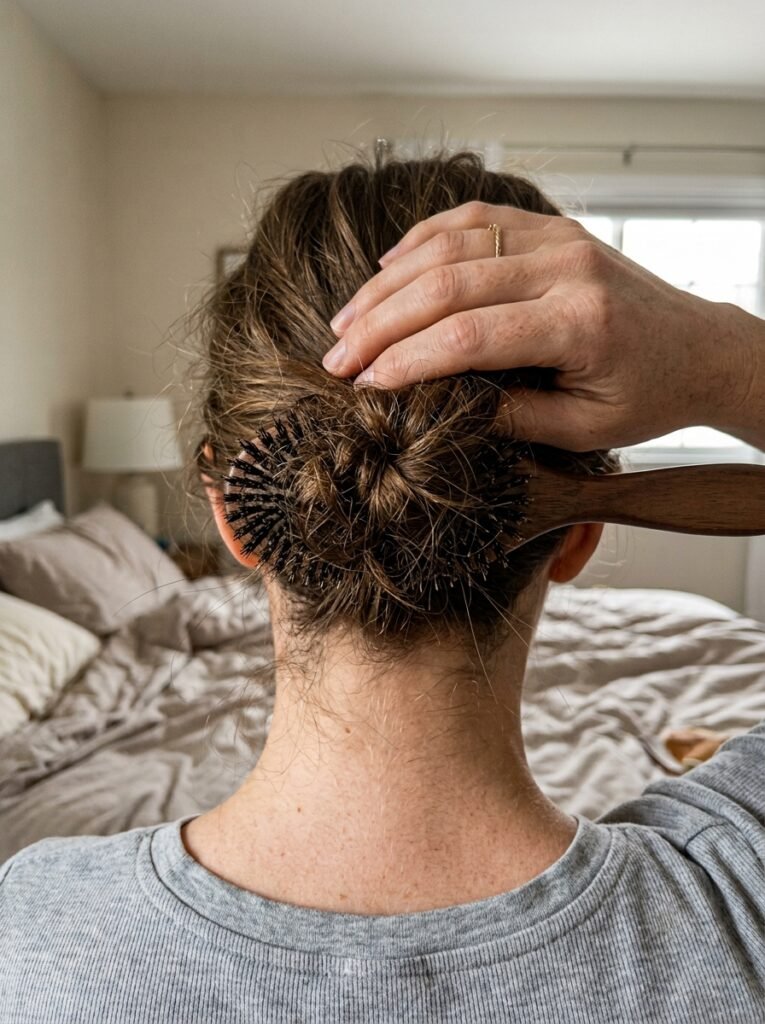
You brushed your hair before bed. You wake up, and there’s a giant knot at the back of your neck. Getting it out takes ten minutes and a handful of broken hair.
If this happens every morning, your hair isn’t the problem. A few small habits are.
Quick answer: Hair tangles when strands rub against each other and catch. This happens more when hair is dry or damaged (the outer layer is rough), fine or curly (strands wrap around each other), or long and loose while you sleep. To stop knots overnight, detangle before bed, use a leave-in conditioner, braid or loosely tie your hair, and sleep on silk or satin.
Below, you’ll find the 9 most common reasons hair tangles, how to detangle without breakage, and a 5-minute night routine to wake up knot-free.
Why Your Hair Tangles So Easily
| Reason | Where you notice it | Fix |
|---|---|---|
| Dry or damaged ends | Ends feel rough and snag | Condition, leave-in, trim |
| Fine hair | Small knots everywhere | Lightweight leave-in |
| Curly or wavy hair | Knots after sleeping or drying | Detangle wet, protect at night |
| Sleeping with hair loose | Knot at the nape | Braid or bonnet |
| Cotton pillowcase | Rough, frizzy back of head | Silk or satin |
| Rough towel drying | Tangles right after washing | Microfiber towel, blot |
| Wind, scarves, coat collars | Knots at the neck | Tie hair back, tuck it in |
| Split ends | Ends keep tangling | Trim |
| Wrong brush or technique | Breakage when brushing | Wide-tooth comb, start at ends |
1. Your ends are dry or damaged
Each strand has an outer layer of tiny overlapping scales. On healthy hair, they lie flat. On dry or damaged hair (from heat, bleach, or sun), they lift up. Raised scales catch on each other like Velcro.
2. Your hair is fine
Fine hair is light and soft, so strands slide around and wrap together easily, especially at the nape.
3. Your hair is curly or wavy
Curls and waves naturally wind around each other. Loose shed hairs also get trapped in curls instead of falling out.
4. You sleep with your hair down
When you toss and turn, your hair rubs against the pillow and itself all night. The nape area gets the most friction.
5. Your pillowcase is rough
Cotton grabs hair and absorbs moisture. That means more friction and drier strands.
6. You rub your hair with a towel
Wet hair is more fragile. Rubbing it with a rough towel lifts the outer layer and creates tangles before you even pick up a brush.
7. Wind, scarves, and collars
In winter, scarves, hoods, and coat collars rub against the back of your hair all day.
8. Split ends
A split end has two or more frayed tips, and each one can catch on other hairs.
9. You brush from the roots down
Starting at the roots pushes all the small tangles down into one big knot at the ends.
How to Detangle Without Breakage
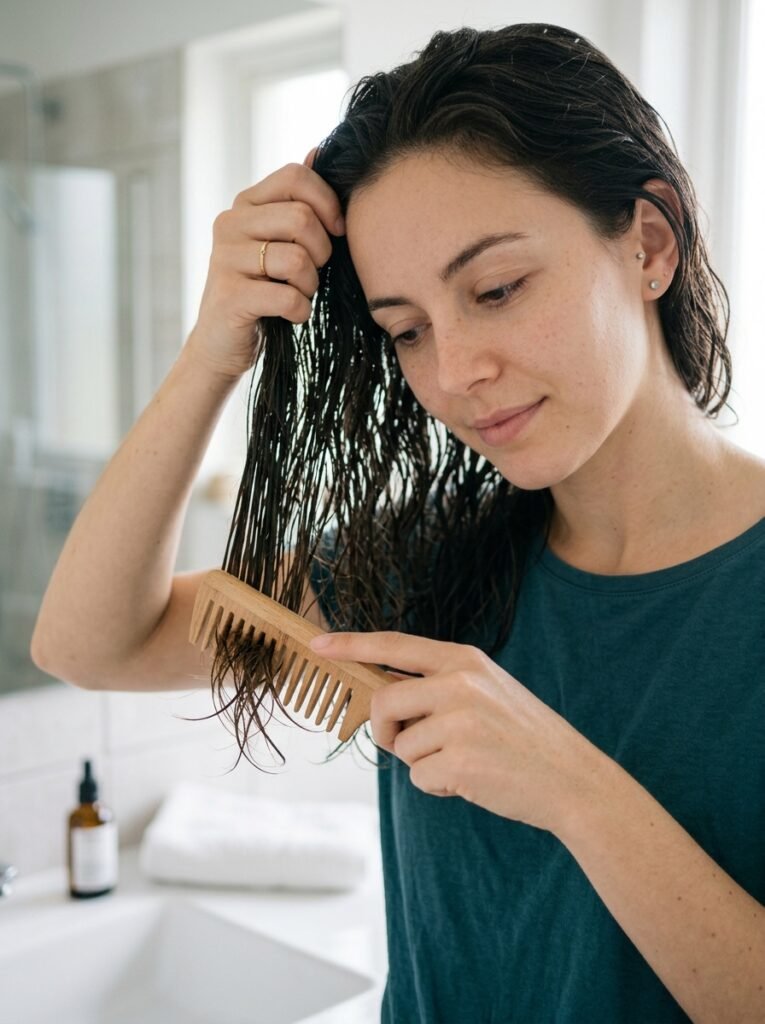
Go slow. Rushing is what breaks hair.
- Add slip first. Spray a detangling spray or work a little conditioner or leave-in through the knotty areas.
- Hold your hair above the knot. This stops the brush from pulling on your scalp.
- Start at the ends. Work out small tangles at the bottom 2 inches first.
- Move up in sections. Once the ends are smooth, move a few inches higher, then higher again.
- Use the right tool. A wide-tooth comb or a flexible detangling brush is gentler than a paddle brush.
- Use your fingers for big knots. Gently pull the knot apart with your fingers before using a comb.
Wet or dry? Straight and fine hair is often easier to detangle when dry or damp with a detangling spray. Curly and coily hair is usually best detangled when wet and coated in conditioner. Either way, be extra gentle with wet hair, as it stretches and breaks more easily.
The 5-Minute Night Routine to Stop Knots
Step 1: Detangle before bed
Never go to bed with tangles. Small knots become big ones overnight. Do a quick detangle using the method above.
Step 2: Add a little leave-in or oil to your ends
A small amount of leave-in conditioner or hair oil on your ends makes them smoother and less likely to catch.
Step 3: Tie your hair up the right way
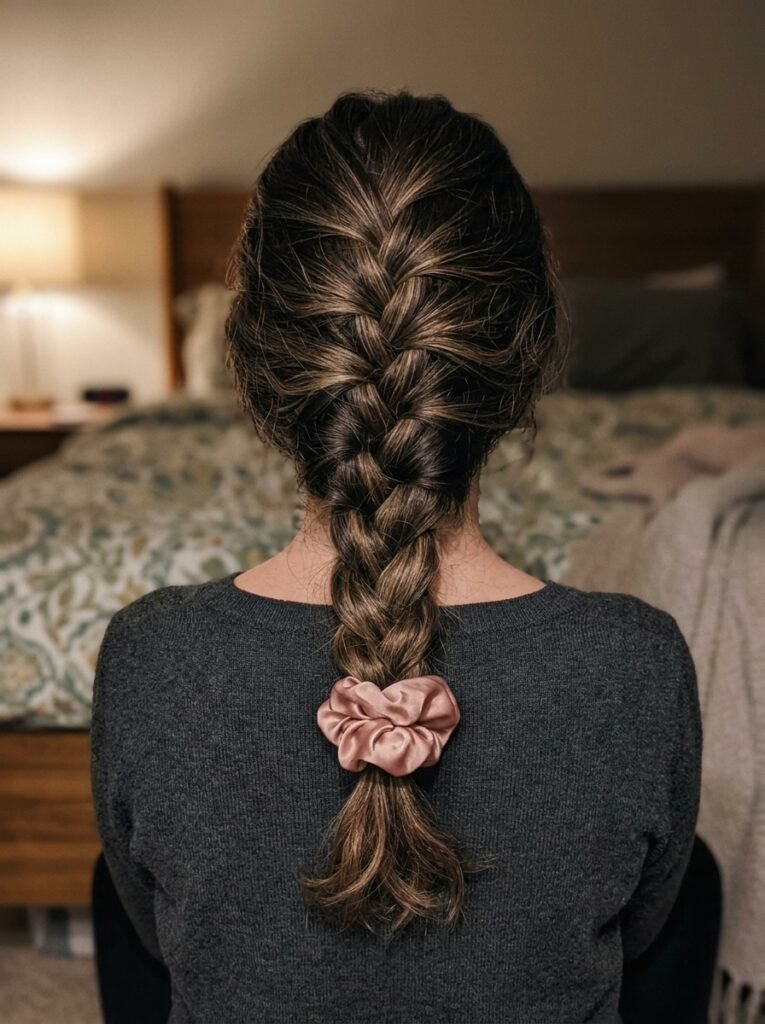
Pick the style that fits your hair:
- Loose braid: Best for long, straight, or wavy hair. One or two loose braids keep strands together.
- Pineapple: For curly hair, gather it loosely on top of your head with a soft scrunchie.
- Loose low bun: For medium hair. Keep it loose, not tight.
Use a silk or satin scrunchie. Elastic hair ties can snag and crease hair. Avoid tight styles, as constant pulling can stress your hairline.
Step 4: Sleep on silk or satin
A silk or satin pillowcase lets your hair glide instead of rub. For extra protection, especially with curly or coily hair, wear a satin bonnet or a silk hair wrap.
Step 5: Never sleep with wet hair (if you can help it)
Wet hair is weaker and tangles more. If you must wash at night, dry your hair at least partly before bed, then braid it.
Wash-Day Habits That Prevent Tangles
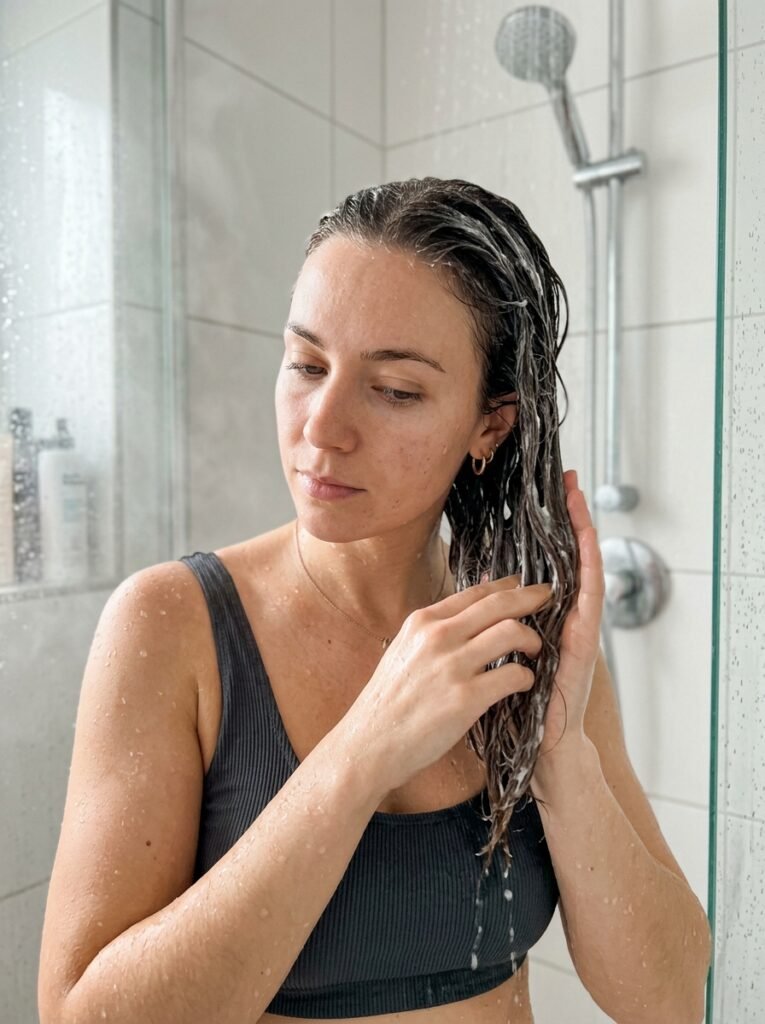
- Shampoo your scalp only. Piling hair on top of your head and scrubbing creates tangles. Let suds run down the lengths.
- Condition every wash. Conditioner smooths the outer layer and adds slip.
- Detangle in the shower while conditioner is in (great for curly hair).
- Blot with a microfiber towel instead of rubbing.
- Use a weekly hair mask if your ends feel dry or rough.
- Trim split ends every 8–12 weeks.
Daytime Tips (Especially in Winter)
- Wear long hair in a braid or low bun on windy days.
- Tuck your hair inside your coat or wear it over a smooth scarf, not under a wool one.
- Choose satin-lined hats.
- Carry a small detangling spray for quick fixes.
Tips by Hair Type
Fine, straight hair: Use light sprays, not heavy creams. A loose braid at night makes the biggest difference.
Thick hair: Detangle in 4–6 sections. Use a leave-in cream and a wide-tooth comb.
Wavy hair: Detangle in the shower with conditioner, then don’t brush once dry. Sleep in a loose pineapple or braid
Curly and coily hair: Detangle only when wet and coated with conditioner. Protect at night with a bonnet or satin pillowcase. Finger-detangle shed hairs regularly.
Bleached or damaged hair: A bond-building treatment and weekly mask help smooth rough ends.
When Tangles Could Mean Something Else
If your hair suddenly tangles far more than usual, feels gummy or stretchy when wet, or breaks off easily, it may be badly damaged from bleach or heat. A stylist can check it. If you notice a lot of hair shedding along with tangles, mention it to a doctor or dermatologist.
FAQ
Why does my hair tangle at the back of my neck? That area rubs against your pillow, collars, and scarves the most. Braid your hair at night and sleep on silk or satin.
Should I brush my hair wet or dry? It depends on your hair type. Straight hair is often easier dry or damp with detangling spray. Curly hair is best detangled wet with conditioner. Be gentle with wet hair either way.
Is it bad to sleep with your hair up? Not if it’s loose. Tight ponytails and buns pull on your hairline. A loose braid, pineapple, or low bun with a silk scrunchie is best.
Do silk pillowcases really help tangles? Many people find they do. Silk and satin cause less friction than cotton, so hair rubs and tangles less.
How do I stop matted hair? Detangle often, keep hair moisturized, and protect it at night. If hair is badly matted, work through it slowly with lots of conditioner, starting from the ends.
The Bottom Line
Hair tangles because of friction, dryness, and sleeping with it loose. Detangle before bed, add a little leave-in to your ends, braid or loosely tie your hair, and sleep on silk or satin. On wash days, condition every time and blot instead of rubbing.
Try it for a week, and you’ll wake up to smoother hair with far fewer knots.