One-Pan Cheesy Beef Pasta Skillet
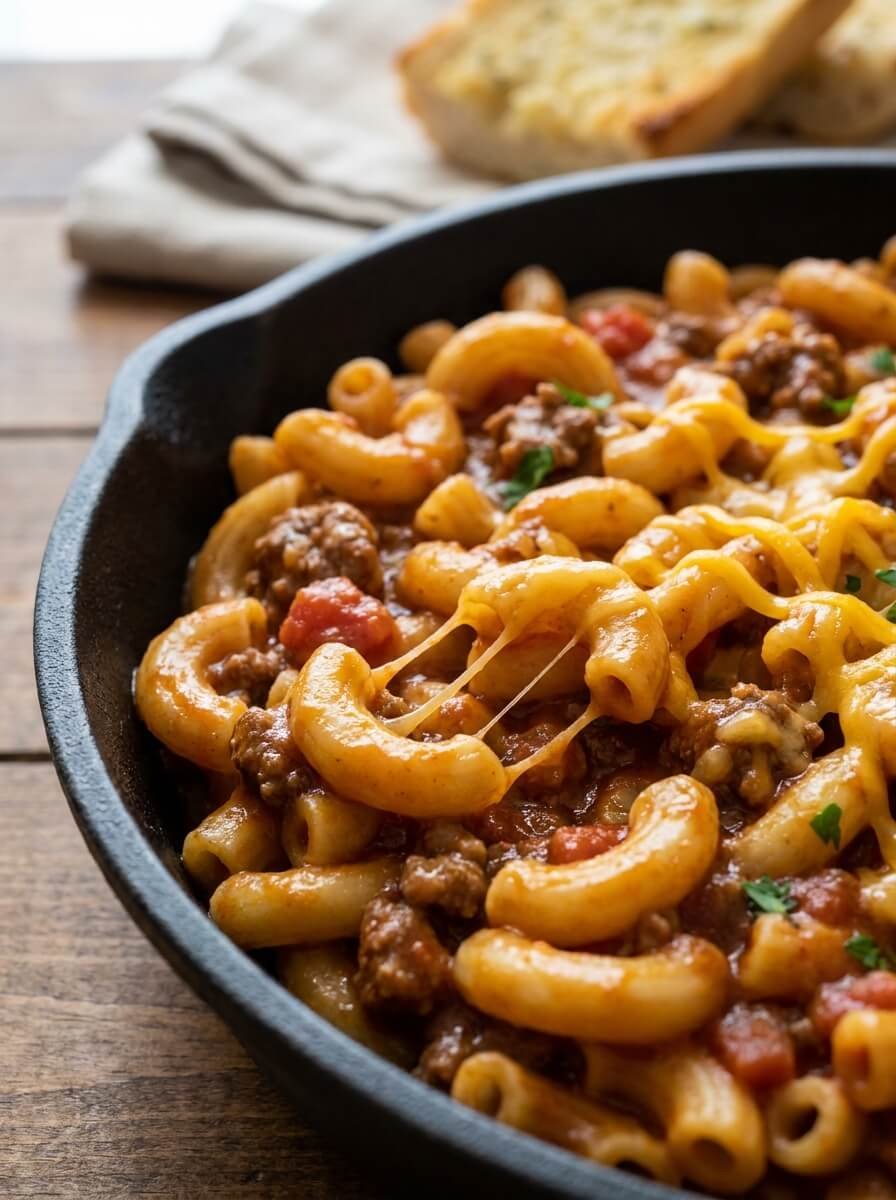
There’s something about a warm, cheesy pasta dinner that makes an ordinary weeknight feel a little more comforting. This cheesy beef pasta skillet is one of my favorite meals when I want something hearty without spending the whole evening in the kitchen.
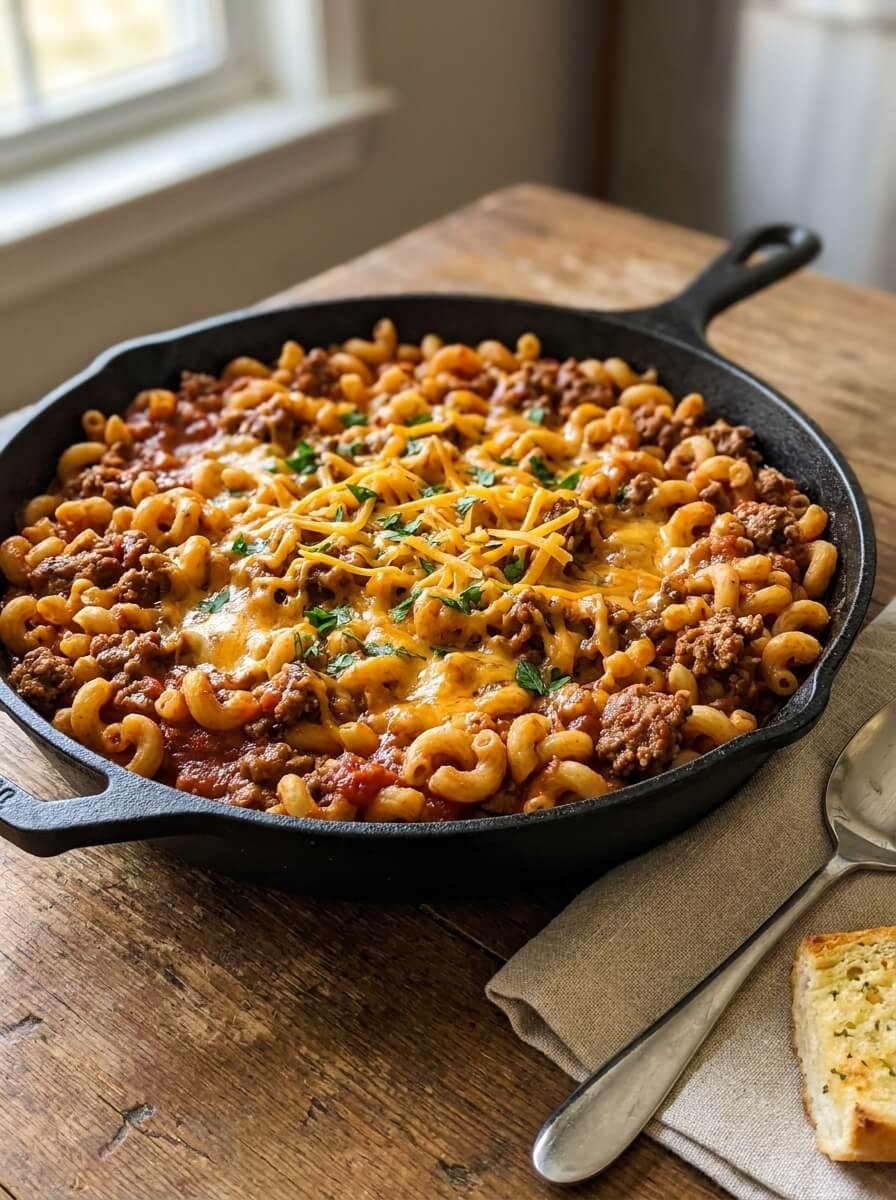
I love how the savory ground beef, tender pasta, rich tomato sauce, and melted cheese come together in one skillet for a dinner that feels familiar and satisfying. It also uses simple ingredients I usually have on hand, which makes it especially useful on busy days.
My favorite part is that everything cooks together, allowing the pasta to soak up all that beefy, seasoned flavor while creating a thick, cheesy sauce. Serve it straight from the skillet with garlic bread or a simple green salad for an easy family dinner.
Why You’ll Love This Recipe
- Easy One-Pan Dinner: Everything cooks in one skillet, so preparation and cleanup stay simple.
- Rich, Cheesy Flavor: Savory beef, tomato sauce, seasonings, and melted cheddar create a comforting combination in every bite.
- Everyday Ingredients: Ground beef, pasta, canned tomatoes, broth, and cheese are easy-to-find pantry and refrigerator staples.
- Easy to Customize: Swap the cheese, add vegetables, adjust the seasonings, or use a different short pasta shape.
- Perfect for Busy Nights: This cheesy beef pasta skillet works beautifully for weeknight dinners, casual family meals, or a cozy weekend supper.
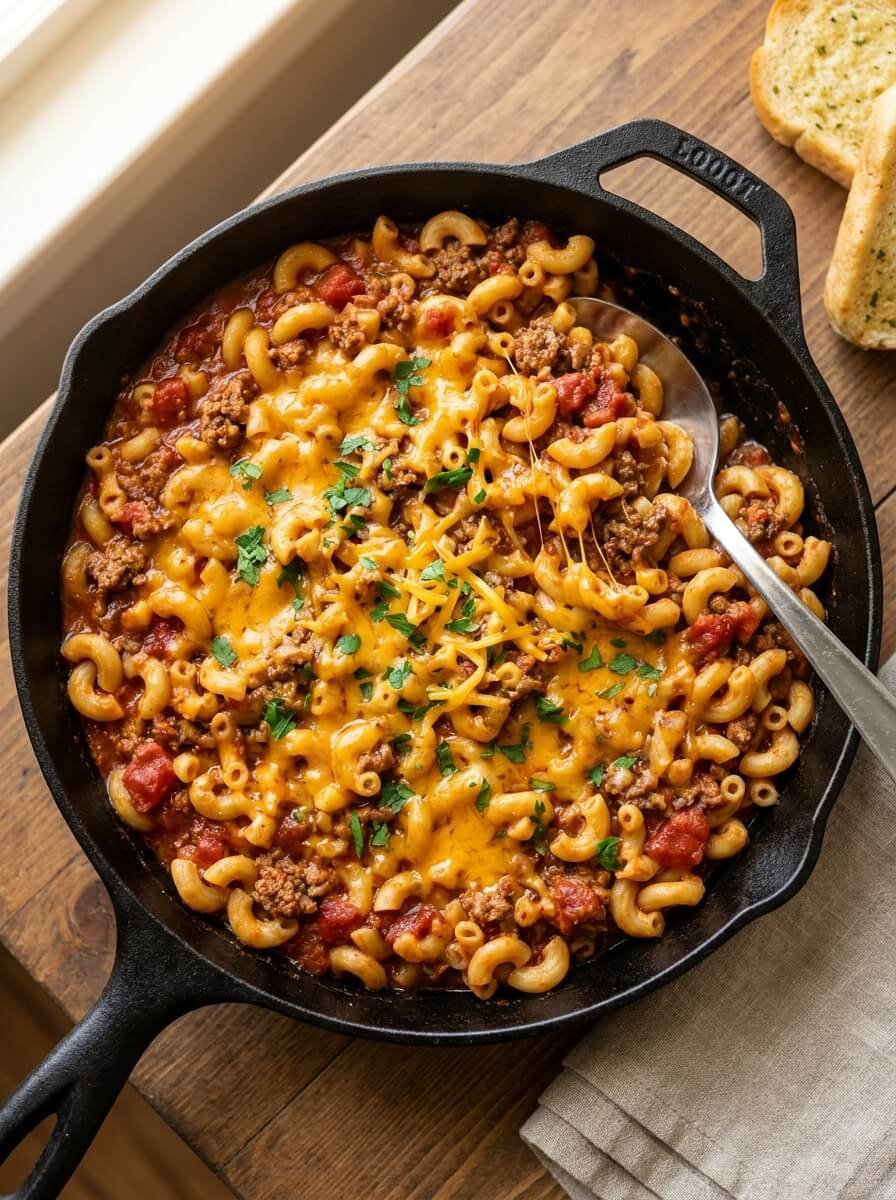
One-Pan Cheesy Beef Pasta Skillet
Ingredients
Method
- Brown the beef. Heat the olive oil in a large, deep skillet over medium-high heat. Add the ground beef and cook for 5–7 minutes, breaking it into small pieces, until browned. Drain excess grease if necessary.
- Cook the onion and garlic. Add the diced onion and cook for 3–4 minutes until softened. Stir in the garlic and cook for about 30 seconds, just until fragrant.
- Add the seasonings. Stir in the tomato paste, Italian seasoning, smoked paprika, salt, and black pepper. Cook for 1 minute, stirring well to coat the beef.
- Add the pasta and liquids. Pour in the diced tomatoes and beef broth, then stir in the uncooked pasta. Make sure most of the pasta is covered by the liquid.
- Simmer until tender. Bring the mixture to a gentle boil, then reduce the heat to medium-low. Cover and simmer for 10–12 minutes, stirring occasionally, until the pasta is al dente. Add a little extra broth if needed.
- Make it creamy. Stir in the milk and cook uncovered for 1–2 minutes until the sauce looks creamy and slightly thickened.
- Add the cheese. Remove the skillet from the heat. Add the shredded cheddar gradually, stirring until completely melted and creamy.
- Rest and serve. Let the cheesy beef pasta skillet rest for 3–5 minutes before serving. Garnish with chopped parsley if desired.
Notes
- Store leftovers in an airtight container in the refrigerator for up to 3–4 days. Reheat gently on the stovetop or in the microwave with a splash of milk or beef broth to restore the creamy texture.
- For extra vegetables, sauté diced bell peppers or mushrooms with the onion, or stir baby spinach into the skillet just before adding the cheese.
- Ground turkey or ground chicken can replace the beef for a lighter variation. You can also use Monterey Jack, Colby Jack, or a cheddar blend depending on the flavor you prefer.
- Because different pasta shapes absorb liquid at different rates, check the skillet while it simmers and add extra broth in small amounts when necessary.
Pro Tips
- Use lean ground beef. An 85–90% lean beef gives you plenty of flavor without leaving the pasta overly greasy.
- Drain excess grease. If your beef releases a lot of fat, carefully drain it before adding the remaining ingredients.
- Toast the tomato paste. Cook it with the beef for about a minute to deepen its flavor before adding the liquids.
- Keep the pasta submerged. Stir occasionally while it cooks so the pasta cooks evenly and does not stick to the skillet.
- Watch the liquid level. Add a splash of broth if the skillet becomes dry before the pasta is tender.
- Shred your own cheese. Freshly shredded cheddar generally melts more smoothly than pre-shredded cheese.
- Add cheese off the heat. This helps the cheddar melt into the sauce without becoming oily or separating.
- Let it rest before serving. Give the finished skillet 3–5 minutes to thicken and allow the flavors to settle.
FAQs
Can I use a different type of pasta?
Yes. Elbow macaroni, rotini, shells, penne, and other short pasta shapes work well. Cooking time may vary slightly depending on the shape and size.
Can I make cheesy beef pasta skillet ahead of time?
Yes. Prepare it as directed, cool it, and refrigerate it in an airtight container. When reheating, add a small splash of broth or milk to loosen the sauce.
What cheese works best?
Sharp cheddar gives the skillet a bold, classic flavor. Monterey Jack, Colby Jack, mozzarella, or a combination of cheeses can also be used.
Can I add vegetables?
Absolutely. Diced bell peppers, mushrooms, spinach, peas, zucchini, or corn are easy additions. Firmer vegetables can be sautéed with the onion before adding the pasta.
How do I keep the pasta from getting mushy?
Cook the pasta only until al dente and check it a few minutes before the suggested cooking time. Remember that it will continue softening slightly while the skillet rests.