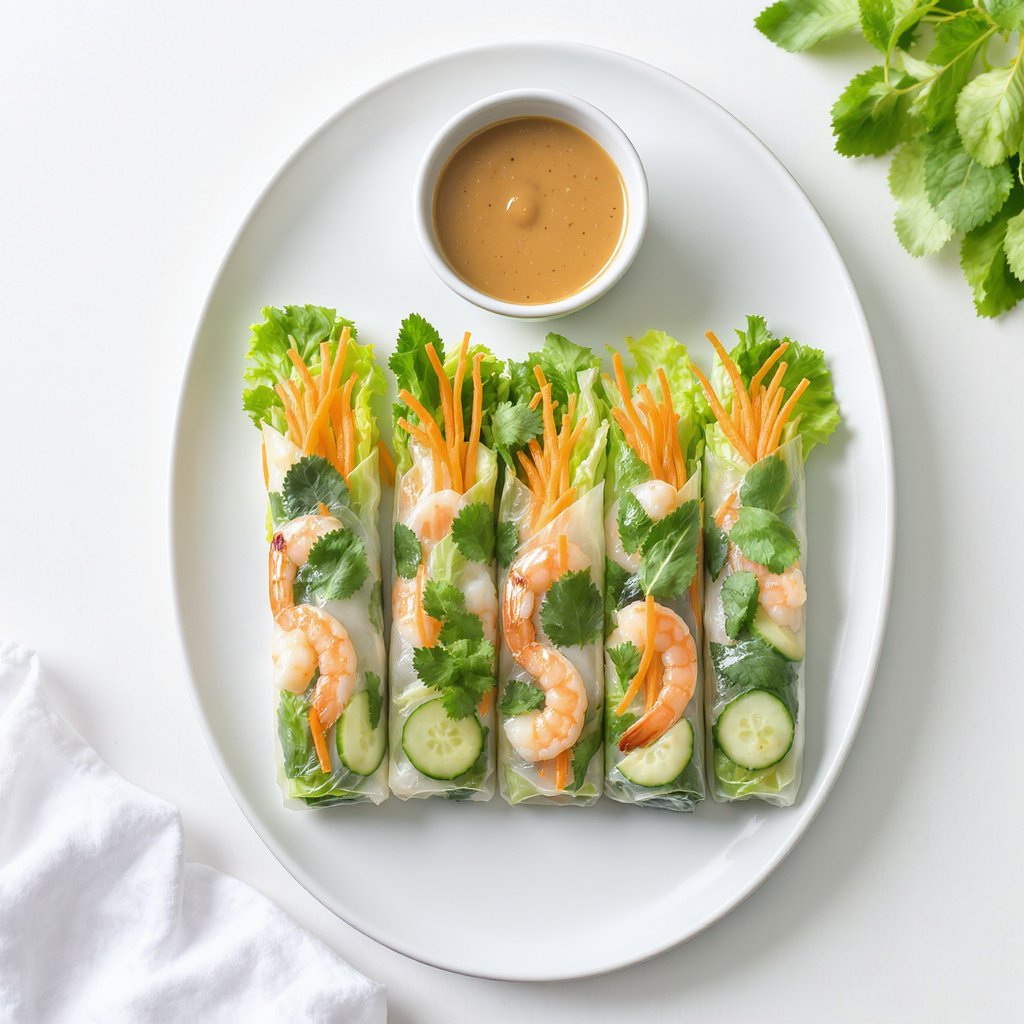
Fresh Vietnamese Spring Rolls
Fresh Vietnamese Spring Rolls are one of those recipes that feel impressive yet are surprisingly easy to make at home. Light, crisp, and bursting with fresh herbs, tender protein, and vibrant vegetables, these rolls are the perfect balance of flavor and texture.
They’re cool and refreshing, not fried, and ideal for warm weather, busy weeknights, or casual entertaining.

Also known as Vietnamese fresh spring rolls or summer rolls, this dish is a staple in Vietnamese cuisine and a favorite across the US for good reason. They’re naturally customizable, meal prep friendly, and pair beautifully with a bold dipping sauce.
Whether you’re planning a party appetizer, a light lunch, or a healthier dinner option, these rolls always fit the occasion.
This guide walks you through everything you need to know to make foolproof Fresh Vietnamese Spring Rolls at home. From ingredient swaps to make-ahead tips, you’ll learn how to roll them confidently and keep them tasting restaurant-quality every time.
Why You’ll Love This Recipe
- Quick and easy to assemble with no cooking required beyond simple prep
- Fresh, light flavors that don’t feel heavy or greasy
- Perfect for parties, holidays, and warm-weather meals
- Beginner-friendly with step-by-step rolling guidance
- Easy to customize for different diets and preferences
- Meal prep friendly and great for make-ahead planning
Ingredients
- Rice paper wrappers
- Cooked shrimp, peeled and deveined
- Rice vermicelli noodles
- Romaine lettuce leaves
- English cucumber
- Carrots
- Fresh mint leaves
- Fresh cilantro
- Fresh Thai basil
- Warm water (for softening wrappers)
Optional Dipping Sauce Ingredients
- Hoisin sauce
- Creamy peanut butter
- Soy sauce or tamari
- Lime juice
- Garlic
Ingredients Guide (Ingredient Breakdown)
Rice Paper Wrappers
Rice paper wrappers are essential for authentic Fresh Vietnamese Spring Rolls. They soften quickly in warm water and create that signature chewy, translucent exterior.
Look for round wrappers made from rice flour and tapioca. If they crack easily, they’re likely too dry or old.
Shrimp
Shrimp adds a slightly sweet, savory flavor and a firm bite. Medium shrimp work best and should be fully cooked and sliced in half lengthwise.
You can substitute with grilled chicken, tofu, or extra vegetables if needed.
Rice Vermicelli Noodles
These thin rice noodles provide structure and help balance the crisp vegetables. They’re mild in flavor and soak up dipping sauce beautifully.
If unavailable, glass noodles are a workable substitute, though the texture will be slightly different.
Lettuce
Romaine lettuce is sturdy and adds crunch without overpowering the rolls. Avoid iceberg, which releases too much water.
Butter lettuce works well for a softer bite.
Cucumber
English cucumber is ideal because it has fewer seeds and less moisture. Cut it into thin matchsticks for easy rolling.
This ingredient adds freshness and a subtle crunch.
Carrots
Julienned carrots bring color, sweetness, and texture. Pre-shredded carrots work, but freshly cut ones taste brighter.
They also help keep the rolls visually appealing.
Fresh Herbs
Mint, cilantro, and Thai basil are what make these rolls unmistakably Vietnamese. Each herb adds a different aromatic note.
If Thai basil is hard to find, regular basil can be used in a pinch.
Step-by-Step Instructions
1. Prepare the Noodles
Cook the rice vermicelli noodles according to package instructions. Drain well and rinse with cold water.
Set aside and fluff lightly to prevent sticking.
2. Prep the Fillings
Slice shrimp in half lengthwise. Wash and dry all herbs thoroughly.
Cut cucumber and carrots into thin, uniform strips for easier rolling.
3. Set Up Your Rolling Station
Fill a wide bowl with warm water. Lay a clean kitchen towel or cutting board nearby.
Arrange all fillings within reach to streamline the process.
4. Soften the Rice Paper
Dip one rice paper wrapper into warm water for 5–7 seconds. It should still feel slightly firm.
Place it flat on your work surface and let it soften fully within 30 seconds.
5. Add the Fillings
Layer lettuce first, then noodles, vegetables, herbs, and shrimp. Keep fillings centered and compact.
Avoid overfilling to prevent tearing.
6. Roll the Spring Rolls
Fold the bottom edge over the filling. Tuck it gently, then fold in the sides.
Continue rolling tightly but gently until sealed.
7. Repeat and Serve
Repeat with remaining wrappers and fillings. Cover finished rolls with a damp towel to keep them fresh.
Serve immediately with dipping sauce.
Variations & Customizations
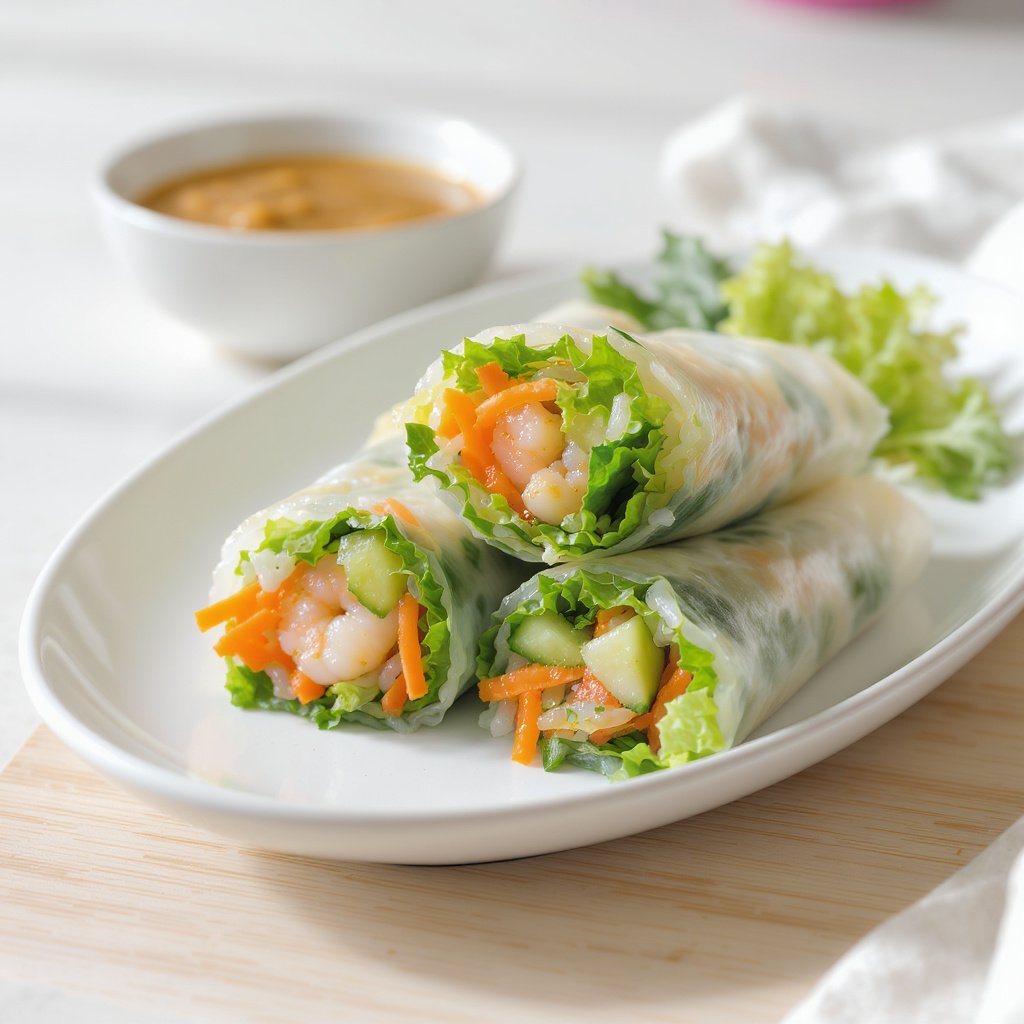
Vegan Fresh Spring Rolls
Replace shrimp with baked tofu, avocado, or marinated mushrooms.
Use a plant-based dipping sauce for a fully vegan option.
Chicken Spring Rolls
Swap shrimp for sliced rotisserie chicken or grilled chicken breast.
Season lightly with salt and pepper for added flavor.
Gluten-Free Option
Most rice paper wrappers and rice noodles are naturally gluten-free.
Use tamari instead of soy sauce in dipping sauces.
Low-Carb Adaptation
Skip the noodles and double up on lettuce and vegetables.
This keeps the rolls lighter and lower in carbs.
Spicy Upgrade
Add thinly sliced jalapeños or a drizzle of chili garlic sauce inside the rolls.
Perfect for spice lovers.
Serving Guide
Party Appetizer
Serve Fresh Vietnamese Spring Rolls on a large platter with multiple dipping sauces.
Ideal for holidays, game days, and casual gatherings.
Light Lunch
Pair two or three rolls with extra protein and a small salad.
A refreshing midday meal that doesn’t feel heavy.
Weeknight Dinner
Serve alongside a bowl of soup or grilled meat.
Great for quick, no-cook dinners during busy weekdays.
Meal Prep Option
Prep fillings ahead and assemble rolls just before eating.
Perfect for work-from-home lunches.
Summer Entertaining
These rolls shine at outdoor events and picnics.
They’re cool, refreshing, and travel well when packed correctly.
Storage & Reheating Guide
Room Temperature
Fresh Vietnamese Spring Rolls are best enjoyed the day they’re made.
They can sit out for up to 2 hours if covered.
Refrigerator Storage
Wrap each roll individually in plastic wrap or parchment paper.
Store in an airtight container for up to 24 hours.
Freezer
Freezing is not recommended. Rice paper becomes brittle and unpleasant once thawed.
For best texture, always serve fresh.
Reheating
These rolls are meant to be eaten cold or at room temperature.
If chilled, let them sit out for 10 minutes before serving.
Shelf Life Tips
Keep rolls from touching to prevent sticking.
Always cover with a damp towel or wrap tightly.
Common Mistakes to Avoid
Over-Soaking Rice Paper
Soaking too long makes wrappers sticky and prone to tearing.
Dip briefly and let them soften naturally.
Overfilling the Rolls
Too much filling causes splitting and messy rolls.
Use smaller portions and roll tightly.
Skipping the Lettuce Layer
Lettuce protects the wrapper from sharp ingredients.
It also adds structure to the roll.
Wet Ingredients
Excess moisture leads to soggy rolls.
Dry all vegetables and herbs thoroughly.
Rushing the Roll
Take your time and roll gently.
Speed comes with practice.
Expert Tips for Best Results
- Use warm, not hot, water to soften rice paper evenly
- Keep a damp towel over finished rolls to prevent drying
- Slice all ingredients uniformly for even texture
- Taste and adjust dipping sauce before serving
- Practice rolling with one wrapper before assembling a full batch
- For parties, make fillings ahead and roll just before guests arrive
FAQs
Are Fresh Vietnamese Spring Rolls healthy?
They’re made with fresh vegetables, herbs, and lean protein. They’re lighter than fried spring rolls and easy to balance.
Can I make these ahead of time?
Yes, but they’re best within 24 hours. Wrap individually and store in the fridge.
Why are my rice paper wrappers tearing?
They’re likely over-soaked or overfilled. Use less water and fewer fillings.
What dipping sauce works best?
Peanut hoisin sauce is classic, but fish sauce-based dips are also popular.
Can I use store-bought cooked shrimp?
Yes, just ensure it’s fully thawed and patted dry before using.
Are these gluten-free?
Most versions are, but always check sauce ingredients to be sure.
How do I keep them from sticking together?
Wrap each roll separately and avoid stacking without parchment paper.
Can kids enjoy these?
Absolutely. You can skip herbs or spice for a kid-friendly version.
Final Thoughts / Conclusion
Fresh Vietnamese Spring Rolls are one of those recipes that reward you every time you make them. They’re fresh, flexible, and perfect for everything from weekday lunches to holiday entertaining. Once you master the rolling technique, you’ll find yourself making them often and customizing them endlessly.
This recipe is designed to be approachable, meal prep friendly, and easy to adapt to your lifestyle. Whether you’re serving them at a party or enjoying them as a light dinner, they always feel special.
If you try this recipe, save it for later, share it with friends, and leave a c
Fresh Vietnamese Spring Rolls
Ingredients
Method
- Cook the rice vermicelli noodles according to package instructions, then drain and rinse with cold water.
- Prep all vegetables and herbs, making sure everything is clean and fully dry.
- Fill a shallow bowl with warm water. Dip one rice paper wrapper into the water for 5–7 seconds.
- Place the wrapper flat on a clean surface and let it soften for about 30 seconds.
- Layer lettuce, noodles, cucumber, carrots, herbs, and shrimp in the center of the wrapper.
- Fold the bottom edge over the filling, tuck in the sides, and roll tightly until sealed.
- Repeat with remaining ingredients. Keep finished rolls covered with a damp towel.
- Serve immediately with dipping sauce or refrigerate briefly before serving.
Notes
- Do not over-soak rice paper; it will continue softening after dipping.
- Avoid overfilling to prevent tearing and messy rolls.
- Rolls are best enjoyed fresh but can be stored for up to 24 hours when wrapped individually.
- Keep rolls from touching to prevent sticking during storage.
- These are meant to be served cold or at room temperature, not reheated.